

(Reprinted from "WeiYanJiaoYu," the official new media account of the Ministry of Education of the People’s Republic of China)
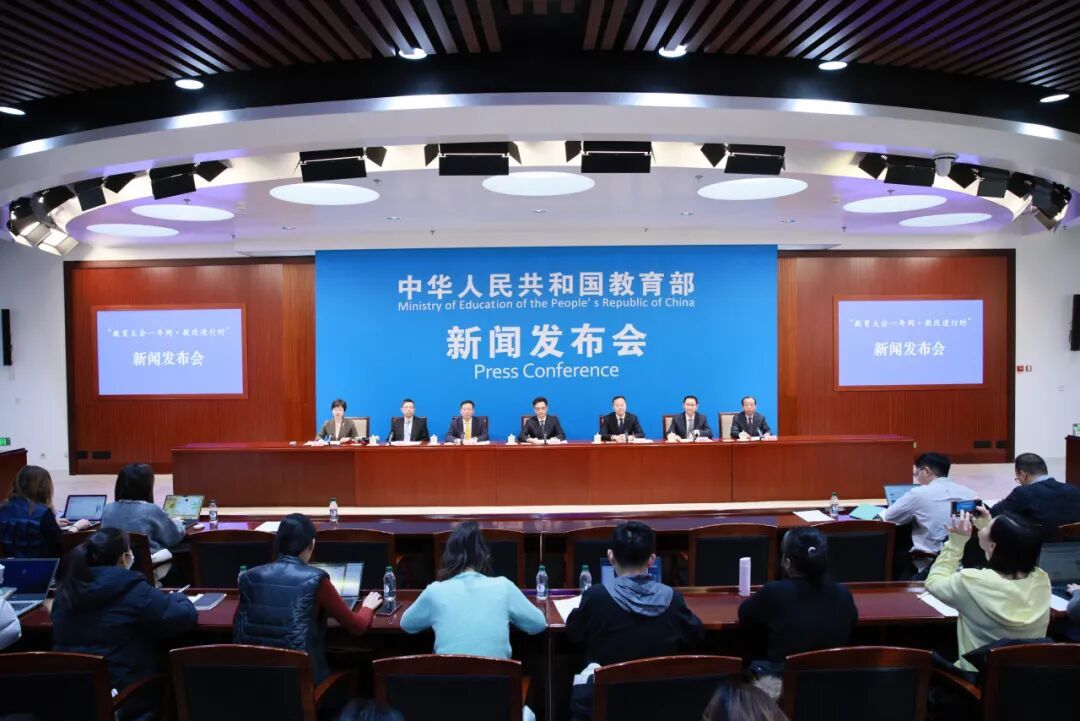
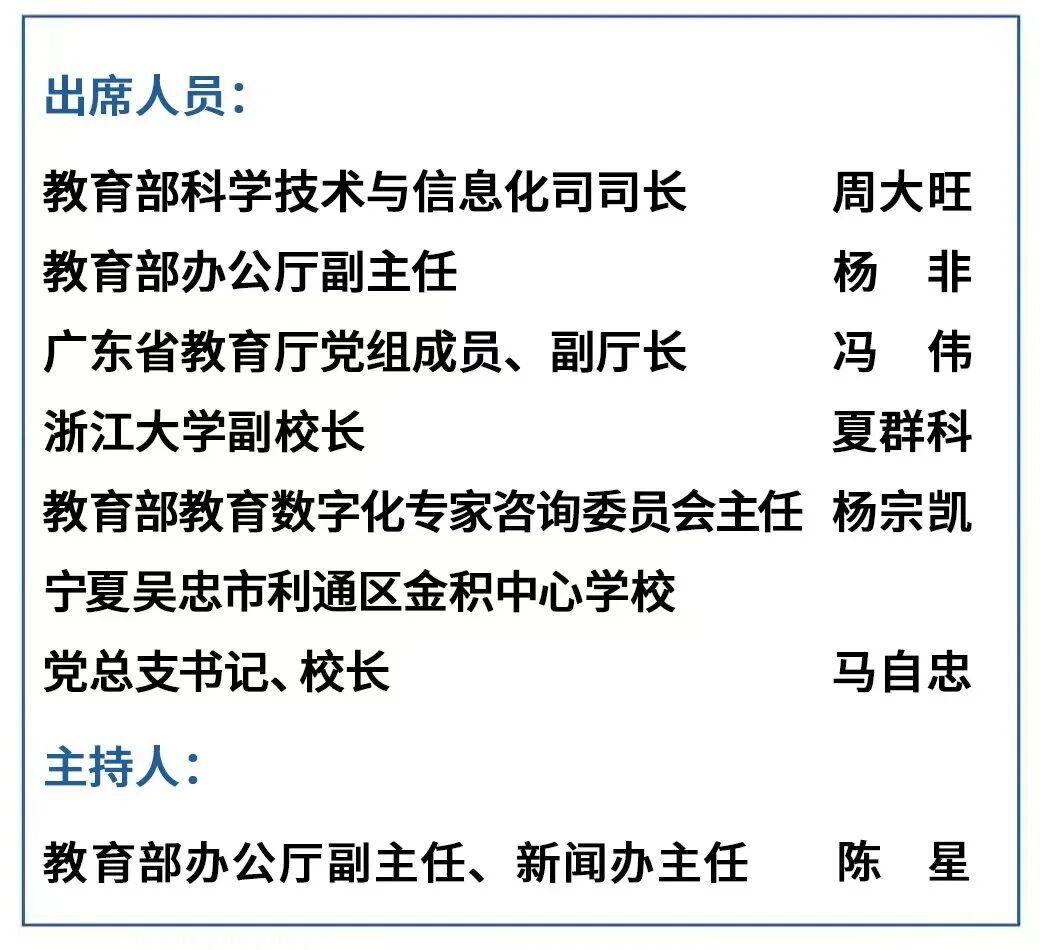
The year 2025 marks the final year of the “14th Five-Year Plan” period. How has education digitalization, as a key driver, helped create new pathways and foster new strengths in the development of education? On December 30, 2025, the MOE held a press conference titled “One Year After the National Education Conference: Education Reform in Action”, which outlined the progress and achievements of education digitalization during the “14th Five-Year Plan” period.
At the conference, Fei Yang, Deputy Director of the General Office of the MOE, provided an overview of the overall development of education digitalization during the “14th Five-Year Plan” period, particularly since the release of the national strategy for education digitalization. Join us as we walk you through the highlights.
Why was this strategic initiative launched?
Education is the foundation for building a strong nation and achieving national rejuvenation. Against the backdrop of a rapidly evolving new round of technological revolution and industrial transformation, digital education has emerged as a defining trend in the global development of education. China, as a major country in the field of education, is committed to becoming a leading force in education worldwide. As President Jinping Xi pointed out, education digitalization serves as a crucial entry point for China to open up new tracks and foster new strengths in the development of education. For the first time, the Report to the 20th National Congress of the Communist Party of China included the advancement of education digitalization as a key initiative, calling for efforts to promote digital education and build a learning society and a learning nation that supports lifelong learning for all. The Outline of the Plan for Building a Strong Education Country (2024–2035) further laid out concrete steps for implementing the national strategy for education digitalization.
What achievements have been made through this strategic initiative?
Since the beginning of the “14th Five-Year Plan” period, the MOE has resolutely implemented the important directives of President Xi and the decisions and plans made by the Party Central Committee. It launched the national strategy for education digitalization to better understand changes, respond effectively, and proactively explore new opportunities. Adhering to the principles of prioritizing connectivity, placing content at the core, and emphasizing collaboration to follow a path of integration, intelligence, and internationalization, the MOE has focused on strengthening and effectively utilizing the Smart Education of China Platform for Public Services. Through these efforts, it has systematically promoted the large-scale and regular application of digital education. China’s digital education has transitioned from quantitative expansion to qualitative advancement, becoming a vital pillar in the development of a leading education system. Notable progress has been made in areas such as promoting high-quality educational equity, supporting lifelong learning, enhancing public services, strengthening education governance, and expanding global influence.
World’s Largest Education Resource Hub Goes Live
178 Million Users Access Free Learning Resources
The Smart Education of China Platform for Public Services has surpassed 178 million registered users, reaching over 200 countries and regions. It records an average of 52 million daily visits, with total visits exceeding 72.6 billion.
Rich Learning Resources
The platform brings together over 130,000 high-quality resources for primary and secondary education, more than 12,500 exemplary vocational courses, and over 145,000 premium higher education courses. Together, these form a comprehensive education resource hub that spans the entire learning journey - from preschool to graduate studies - and covers all key dimensions of student development, including moral grounding, intellectual ability, physical vigor, aesthetic sensibility, and work skills.
Quality Instruction Across Geographical Divides
Various instructional models supported by the platform, such as dual-teacher classrooms, dedicated delivery classrooms, and master teacher classrooms, are now being widely adopted across regions. Initiatives like the “MOOCs Journey to the West” are carrying quality educational resources across mountains and rivers. Whether along the southern coast or on the Qinghai-Tibet Plateau, learners can access top-tier educational resources through the national platform, giving a strong boost to the balanced distribution of high-quality education.
Elevating Teaching Quality
The platform also integrates more than 60 application tools and offers free access to support key teaching and learning scenarios, including student learning, lesson preparation, tutorials, after-school services, and home-school collaboration. With such abundant resources and tools, advanced teaching models, for instance, flipped classrooms, inquiry-based learning, and project-based learning, are now being implemented more effectively, freed from traditional constraints and contributing to an overall rise in teaching quality.
Supporting Teachers’ Professional Growth
The platform has contributed to forming over 500,000 teacher professional teaching and research communities. More than 64 million instances of teachers using the platform for lesson preparation and instruction have been recorded, and cumulative teacher training through the platform has exceeded 90 million sessions. These efforts have significantly strengthened teachers’ digital literacy and professional skills.
Lifelong Learning Never Ends
Learning Anytime, for Everyone
The Smart Education of China Platform for Lifelong Learning brings together over 8,000 courses from 38 institutions. Whether you are looking for a job, aiming to acquire new skills, or seeking to enrich your retirement life, this platform offers resources tailored to every need.
A Boost for Job Seekers
The platform provides targeted support to enhance individuals’ employability. Dedicated sections have been established for graduates and adult learners, featuring areas such as workplace skills and continuing education. The “Double Thousand” initiative, designed to strengthen employment capacity, has introduced over 2,600 micro-major programs and more than 1,400 vocational training courses, contributing to high-quality and full employment outcomes.
Enriching the Golden Years
Tailored offerings help older adults enjoy a fulfilling life in retirement. Columns such as the silver-age academies and cultural enrichment have been developed to expand the range of learning resources available to senior citizens. In March 2025, a course on healthy aging delivered by Academician Nanshan Zhong was launched; it garnered over 12 million views on its first day alone, receiving widespread acclaim.
Advancing Knowledge for All
The platform also supports the broader public in enriching their knowledge and competencies. Columns dedicated to scientific literacy and personal interests offer courses on topics such as legal education and family education, catering to the diverse and individualized learning needs of users.
Recognition of Learning Outcomes
Innovative mechanisms for the validation and transfer of learning outcomes have been put in place. A national credit bank for vocational education has been established, under which 25 provincial-level lifelong education credit banks have been developed. Pilot initiatives for regional credit recognition are underway in areas such as the Yangtze River Delta and the Guangdong-Hong Kong-Macao Greater Bay Area (GBA), further refining the credit bank framework and supporting the development of a learning society.
Hassle-Free Education Services
More Miles for Data, Fewer Steps for Individuals
The public service hub on the national platform gathers 51 government services across eight categories, including employment, examinations, and study abroad, serving a total of 140 million users.
Comprehensive Service Coverage
The scope and quality of education-related government services have continued to expand. With a strong focus on streamlining administrative processes, the platform offers a range of services, such as student status verification, academic credential verification, and certificate authentication. It has been integrated with government service platforms in 32 provinces and municipalities, connecting to a total of 1,016 local education service items. By adopting a unified application intake and integrated online processing model, the platform has steadily improved service efficiency to ensure that data travels farther while citizens make fewer trips.
Effortless Service Experience
Public satisfaction and the tangible benefits experienced by citizens have been steadily increasing. The MOE has launched an information system for China National Center for Student Assistance Administration in order to provide one-stop government services, for example, financial aid policy inquiries and national scholarship certificate verification. This has made public services more convenient. In Xining, Qinghai Province, and other localities, pilot programs for compulsory education enrollment processing systems have been introduced. Nearly 50 percent of enrollments are now completed with “zero paper documentation” required, significantly shortening processing times and greatly reducing the burden on parents. This allows the public to directly benefit from the efficiency and convenience of digitalization.
Big Data + Education
Precise in Analysis, Warm in Practice
Data integration is currently accelerating. The National Center for Educational Big Data has been connected with 32 provincial education departments and over a thousand universities. This establishes a central data sharing and exchange hub for the education sector at the national level.
Enhanced Service Quality
Take education supervision as an example. More than 1,300 universities have been connected to the Center. By leveraging core monitoring indicators for various assessments, the system dynamically monitors and issues early warnings on institutional performance. This effectively helps to optimize resource allocation with greater precision.
More Targeted Education Services
Take Wuhan University of Technology as a typical demonstration. By accessing data from three ministries and commissions under the State Council, the university launched an “Operation Warmth” initiative. It has developed a model to identify and recommend students facing financial difficulties. In this case, financial aid has been discreetly disbursed into student accounts, illustrating how the power of data can bring warmth to education.
More Informed Education Governance
Data-driven approaches are steadily advancing governance capabilities. The aggregation of data has enabled the creation of an “education digital map”, which supports scientific analysis and forecasting of school-age populations, educational resources, and the balance between talent supply and demand. This has led to notable improvements in the level of management precision and the quality of decision-making.
China’s Digital Education Goes Abroad
An International Calling Card
Hosting Global Conferences
The World Digital Education Conference has been successfully held for three consecutive years. This year’s event welcomed over 400 international guests from 84 countries and regions.
Contributing China’s Vision
The world’s first White Paper on China’s Smart Education was released, offering China’s insights and approach to the global development of digital education. The international edition of the Smart Education of China Platform provides nearly 900 multilingual courses to learners worldwide. The Luban Workshops, a vocational education initiative, have reached 31 countries across Asia, Africa, Europe, and the Americas, sharing China’s high-quality digital education resources with global learners and building bridges for cross-cultural exchange and mutual learning.
Expanding International Collaboration
The World Digital Education Alliance was established, bringing together 115 organizations from 43 countries and regions. The journal Frontiers of Digital Education was rolled out, alongside the release of the Global Digital Education Development Index. China has become one of the leading countries in UNICEF’s Public Digital Learning Portal initiative. The Smart Education of China Platform for Public Services received the highest award for education information technology within the UN system. Recently, delegations from Thailand, Cuba, Italy, and other countries have visited to exchange insights on digital education development. China’s international influence in the field of digital education has grown significantly.
Looking ahead, the best is yet to come
The MOE will take the national strategy for education digitalization to its second phase to raise the level of public services and governance in digital education. This will drive a systemic leap - from resource pooling to public service provision, and onward to modern governance capabilities - to fully empower high-quality educational development through digital means.
During the “14th Five-Year Plan” period, China’s efforts for education digitalization have entered a new phase. What makes this phase new? Let’s hear the analysis from Zongkai Yang, Director of the Expert Advisory Committee on Education Digitalization, MOE.
During the “14th Five-Year Plan” period, especially since the implementation of the national strategy for education digitalization in 2022, China’s education digitalization development has moved beyond isolated experiments and piecemeal applications. It has now entered a new stage of systematic integration and comprehensive deepening - what is known as the “smart education”.
1. High-quality courses are no longer “scarce”. Children across the country can now access them.
In 2022, the MOE officially launched the Smart Education of China Platform for Public Services. Top-tier schools, authoritative institutions, and expert education teams collaborated to develop high-quality learning resources, which are made available free of charge to teachers, students, and lifelong learners nationwide. This initiative has transformed premium educational content from a localized advantage enjoyed by a few schools into a public service product that supports balanced educational development across the country. As a result, it has effectively advanced both educational equity and the equitable distribution of quality resources.
2. Teaching and learning become more personalized and diverse.
With the support of big data and AI, the teaching process now enables analysis based on student learning data and intelligent interventions. The learning process is shifting toward collaborative, inquiry-based, and immersive experiences with human-machine synergy. This transformation not only facilitates large-scale personalized instruction but also marks a shift in China’s education from knowledge transmission to competency-based learning.
3. AI moves beyond a supporting tool and into the core of education.
Through practices that empower education with AI, AI has evolved from a single-purpose tool into a core element driving the entire teaching and learning process. It has now reached key areas such as entrance exams, teaching evaluation, employment services, and campus governance. Digital technology has become an internal facilitator of education system transformation, delivering critical support for building a flexible, open, and personalized education system for the future.
4. Education governance goes beyond solely “relying on experience”. Data-driven decisions bring greater precision.
With the launch of the National Big Data Center and the National Platform Intelligent Platform Infrastructure, governance in the education domain is progressively realizing dynamic monitoring, accurate analysis, and data-driven early warning across the entire data landscape. This not only greatly improves management efficiency and response times but also drives the transformation of education governance systems toward greater precision, intelligence, flattening, collaboration, and modernization. “Letting data speak and guide decisions” is set to become the new paradigm for education governance.


 Home
Home phone
phone