

(Correspondent: Xian PENG)
On July 16, 2025, to further advance the research of the National Natural Science Foundation of China (NSFC) Major Project “Theories and Key Technologies of AI-Enabled Teaching and Learning”, Professor Jianwen Sun, Deputy Director of the National Engineering Research Center for E-Learning (NERCEL), led key research members of the project team - including Zhicheng Dai, Xian Peng, Zhu Su, Xiaoxuan Shen, and Qian Wan - to the State Key Laboratory of Cognitive Neuroscience and Learning at Beijing Normal University (BNU) for a specialized seminar.
The exchange session was chaired by Professor Chunming Lu, lead researcher of Sub-project 1 - “Research on Cognitive Mechanisms of Learning in Intelligent Teaching Contexts”, and designed to focus on in-depth discussions around this Sub-project. The aim was to enhance collaboration between the major project and the Sub-project unit and to propel the research toward deeper development.
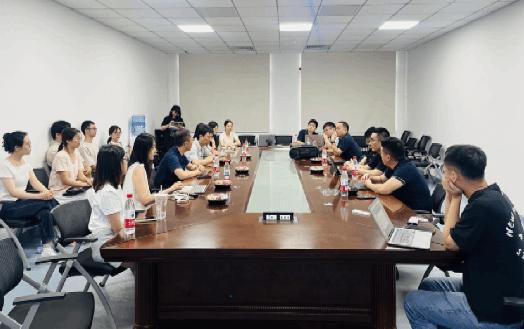
First, Hands-On Exposure to Cutting-Edge Technologies to Deepen Research Understanding
At 9:00 a.m., Professor Chunming Lu guided the team on a laboratory tour. He introduced advanced facilities such as the multimodal EEG teaching experimental platform and cross-scenario learning behavior analysis equipment. He then elaborated on frontier achievements in the interdisciplinary field of brain science and education, highlighting methodological breakthroughs and innovative applications in research on cognitive neural mechanisim under Sub-project 1. Through direct observation and interaction, the project’s core researchers gained a more tangible and thorough understanding of the Sub-project’s progress and technological applications.
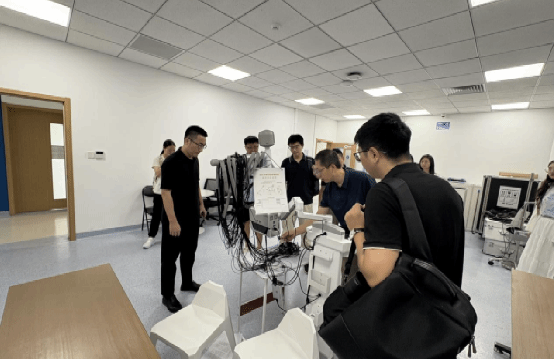
Second, Focusing on Learning Cognitive Mechanisms and Sharing Innovative Outcomes
Professor Chunming Lu’s team comprehensively presented their current research progress of Sub-project 1.
Doctoral candidate Xiaodan Feng reported on the study - “Rapid Cortical Learning Systems Support Knowledge Construction in Real Classroom Teaching” - from an educational application perspective. This study integrates technologies such as wearable functional near-infrared spectroscopy (fNIRS) and machine learning, comparing a hybrid “self-study + lecture” teaching model (LH) with the traditional lecture-only model (H-only). It reveals the implicit cognitive mechanisms and neural underpinnings through which effective teaching models promote students’ knowledge construction in authentic classroom settings.
Doctoral candidate Tengfei Zhang then delivered a presentation titled “Parsing Communicative Uncertainty: Computational Inference Based on Peer Intentions” from a neurocomputational perspective. He offered a detailed analysis of how students generate predictions about others during dynamic collaboration and how these predictions influence language production planning.
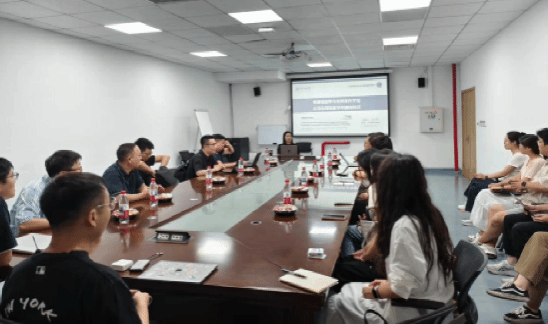
Third, Sparking Academic Exchange and Exploring Pathways for Further Integration
Project members from NERCEL shared their research progress respectively and proposed specific pathways for deeper integration with Sub-project 1. For instance, Professor Zhicheng Dai, in connection with Sub-project 5 - “Research on Construction and Demonstration Application of Intelligent Teaching Platforms” - suggested that the cognitive mechanism findings from Sub-project 1 could inform and optimize human–computer collaborative teaching models in primary school science education. Ideally, this could make instructional processes more aligned with students’ cognitive and neural development patterns.
Furthermore, attendees engaged in thorough discussions on innovative applications of technologies such as EEG, fNIRS, and fMRI in educational settings. During the discussion, they explored and further clarified cooperative directions in experimental design, data sharing, and theoretical development.
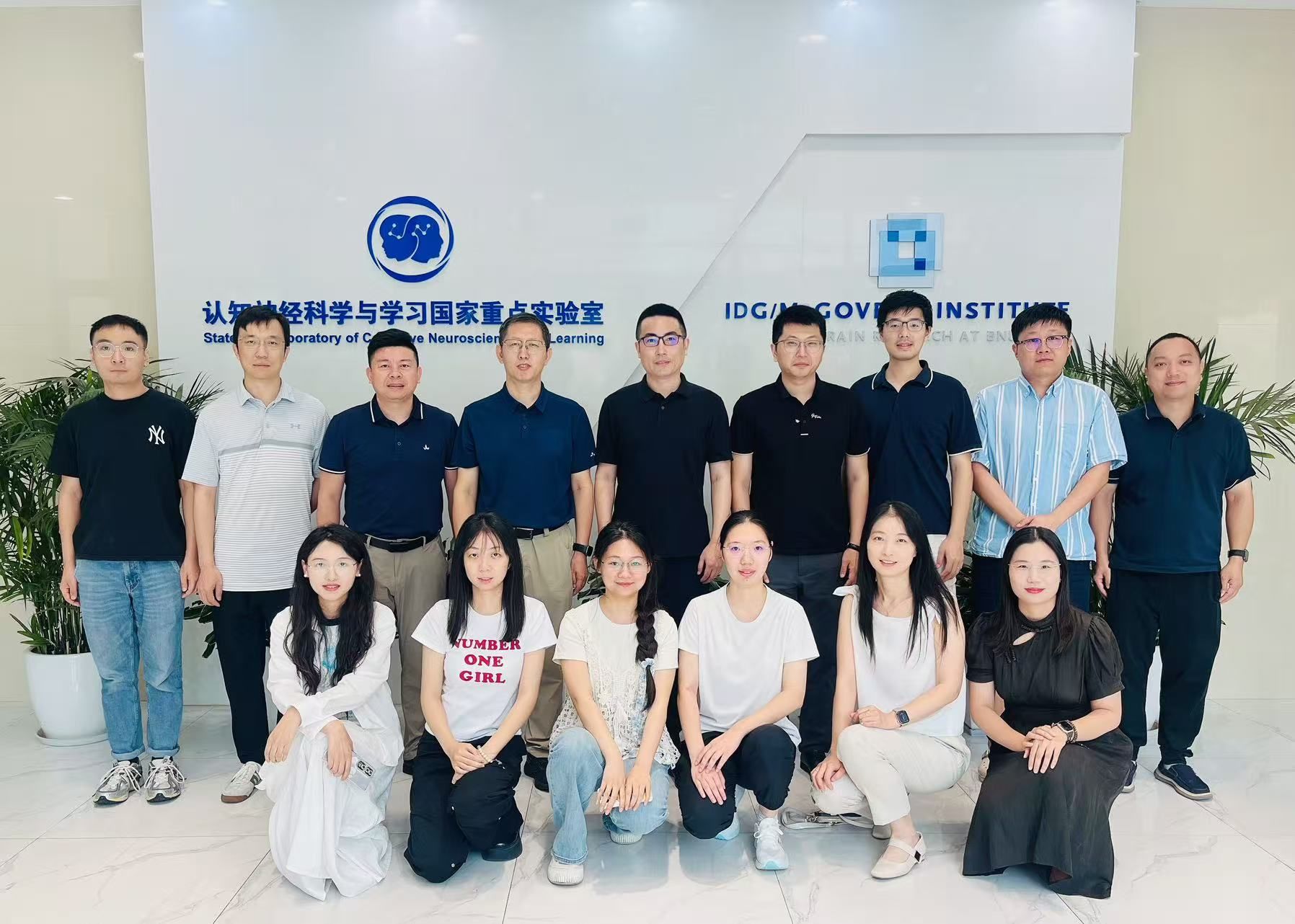
This exchange meeting not only strengthened coordination between the major project and the Sub-project unit, but also fostered the cross-fertilization and integration of research ideas. It has laid a solid foundation for the smooth progression of subsequent project activities.
Editor: Ruye LI
Reviewers: Na LI, Xiaoxiao ZHU


 Home
Home phone
phone